A wind farm operator's wind turbines produced 85% of predicted energy. Their sales contracts put them into bankruptcy. I have some suggestions.
Tags: Wind, Energy Market
Link to article in Energy Connects
Here is a story of a wind farm operator who committed to provide power whether the wind turbines generated it or not. This proved to be inadequate risk management.
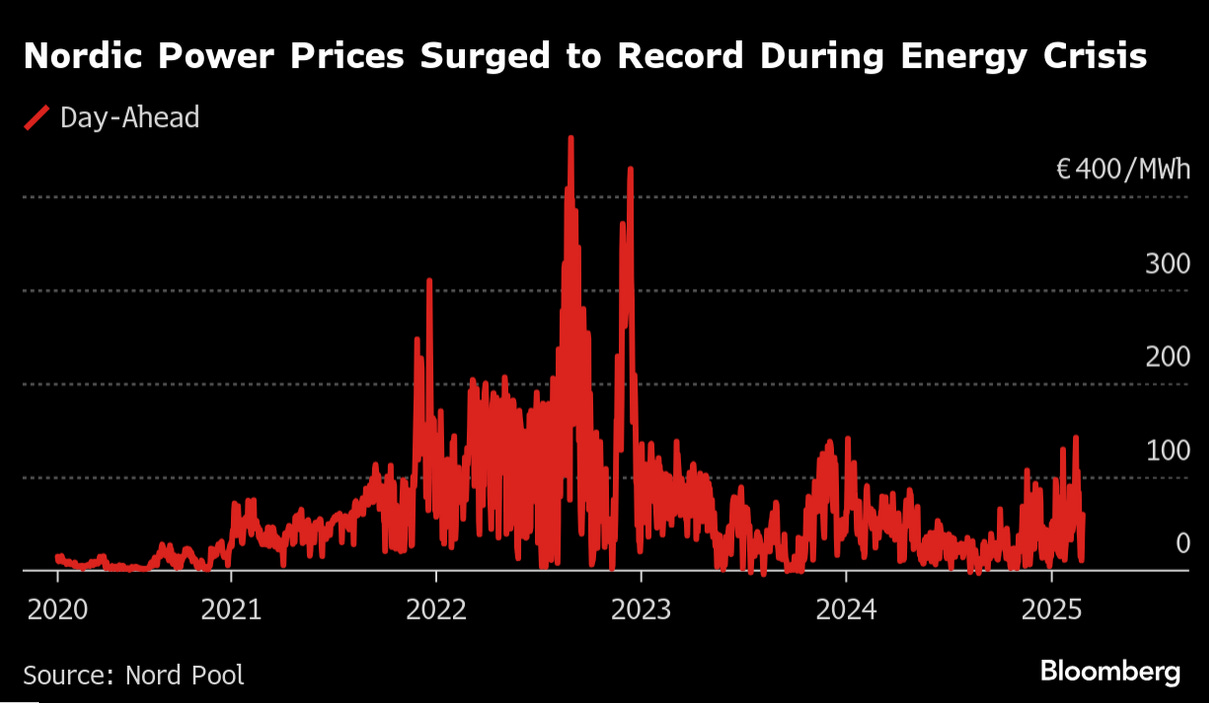
By the terms of the Power Purchase Agreement sales contract, the owner was forced to buy electric energy on the spot market, which experienced the price spike in the graph.
The article has details on the Power Purchase Agreement that the parties thought was a win-win business model.
The wind turbines also fell short of the projected quantity of energy available for sale.
My opinion is that wind-sourced electricity is a valuable resource with an input energy that is beyond the war-related price spike of natural gas-sourced that led to financial problems for this wind farm operator. The kinetic energy of the wind has been put to use in windmills and sailing ships for centuries. We now can convert it to electric energy with no need for a fuel supply chain and the points of failure this project encountered when it needed to buy spot market electricity.
I am sure the history of this business venture will be studied for lessons learned. I predict the risks of a shortfall in wind-sourced electricity will be split between the seller and the buyer is a way that puts more risk on the buyer. One party or the other needs to adjust demand and supply until they match.
Here are my suggestions.
The ideal buyer is probably one that can vary its demand and not need either party to procure power on the spot market or provide fossil-fuel generation. Perhaps a pair of buyers could be found where one of them takes the entire role of varying its demand, perhaps a company that makes a seasonal product and stores inventory for later sale.
The ideal seller is perhaps a pair of energy producers, one with fossil-fuel generation and the other with wind farms; perhaps a joint venture for the purpose of selling electricity. The plan for meeting a fixed customer demand by varying the fuel input of the joint venture could cover the issue of wind-sourced electric energy varying with the wind.
Here is the concluding quote from the article.
The location is excellent, said Jakob Norstrom, CEO of Statkraft in Sweden. But when signing a PPA, he struck a note of caution: “It’s important to find the right balance so you don’t promise too much.”

