
Three articles for your Professional Reading - May 28, 2026
Incentives for Distributed Energy Resources, Back-to-Basics Code Compliance in Pump Selection, Vehicle-to-Home Demonstration Project
These three items have caught my eye as valuable in professional reading.
Remember all possible sources of incentives in Demand Management
Back-to Basics: Code compliance is a necessary part of pump selection
Vehicle-to-Home hardware and software is being demonstrated
Please add your name to my list of subscribers if you find these of interest to you, too, and choose the subscription level that fits you best as a working professional or a person with interests in energy use.
===============================
1. ASK THE EXPERT - Maximizing DER Value: Key Considerations for C&I Sites
Source: EnergyTech
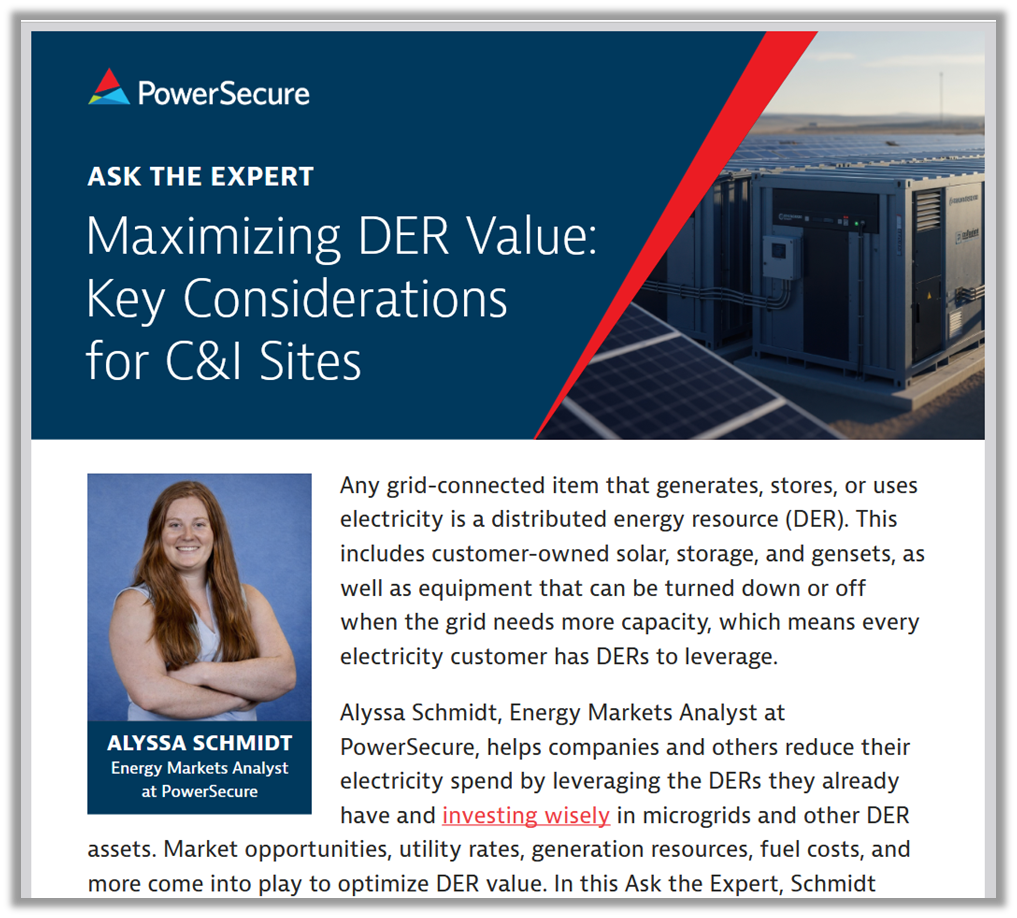
Demand Management programs pay incentive dollars when you can comply with the rules. In this three-page overview Alyssa Schmidt mentions possible income streams for curtailing demand and exporting power. She mentions specific opportunities in Texas, New England, California, PJM’s territory, and MISO’s territory. If you are keeping a checklist of steps in your project development process these ideas warrant a checkbox.
Link: White paper download
Quote:
“Any grid-connected item that generates, stores, or uses electricity is a distributed energy resource (DER). This includes customer-owned solar, storage, and gensets, as well as equipment that can be turned down or off when the grid needs more capacity, which means every electricity customer has DERs to leverage.”
===============================
2. Specifying Pumping Systems for Potable Water Applications
Source: Pumps & Systems magazine
This is a back-to-basics article.
Project development engineers need to understand the operation of pumps and fans. Many times energy can be saved by adjusting a balancing valve to move the operating point on the pump curve closer to the Best Efficiency Point. Other times energy savings can be achieved by right-sizing the equipment and a new pump is called for.
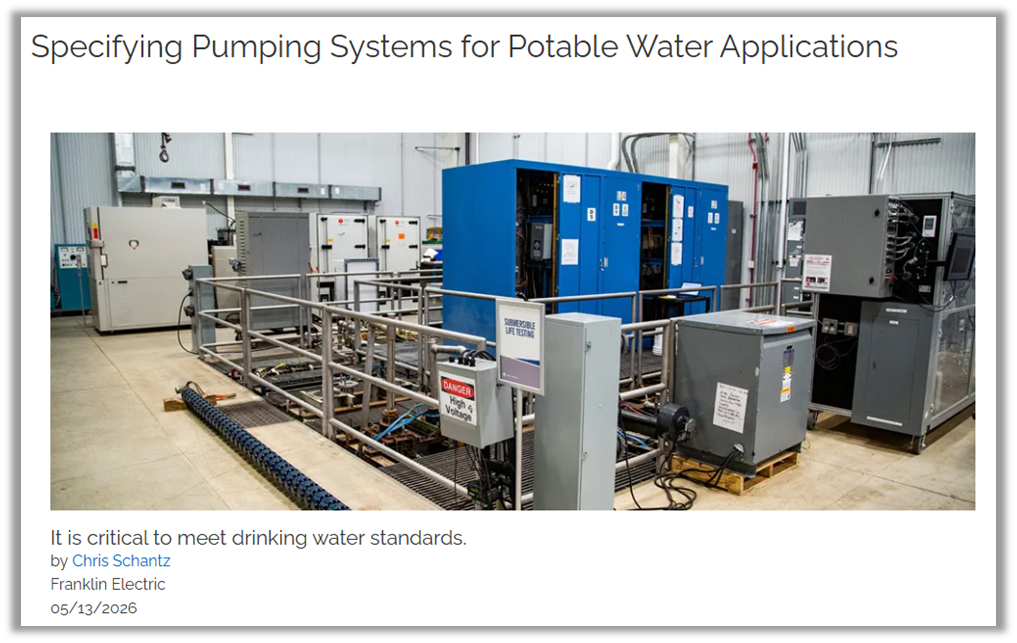
This article goes over the basics of the pump selection process in the context of code compliance for drinking water.
Link: Code compliance article
Quote:
“Specifying a pumping system for potable water requires balancing multiple variables that affect not only submittal approval but long‑term reliability and operating confidence. Primary considerations include:
Wetted materials – All surfaces in contact with potable water must meet NSF/ANSI 61 requirements for the intended operating conditions.
System configuration – Certification often applies only to defined configurations; changes to seals, coatings or auxiliary components may impact compliance.
Operating conditions – Pressure, temperature and flow must remain within certified limits.
Service and maintenance – Replacement parts, lubricants and modifications can unintentionally compromise compliance if not reviewed for potable‑water use.”
===============================
3. Puget Sound Energy is turning to EVs for backup power and grid support
Source: Smart Cities Dive
Batteries on both sides of the customer meter can be used to alleviate congestion on the grid.
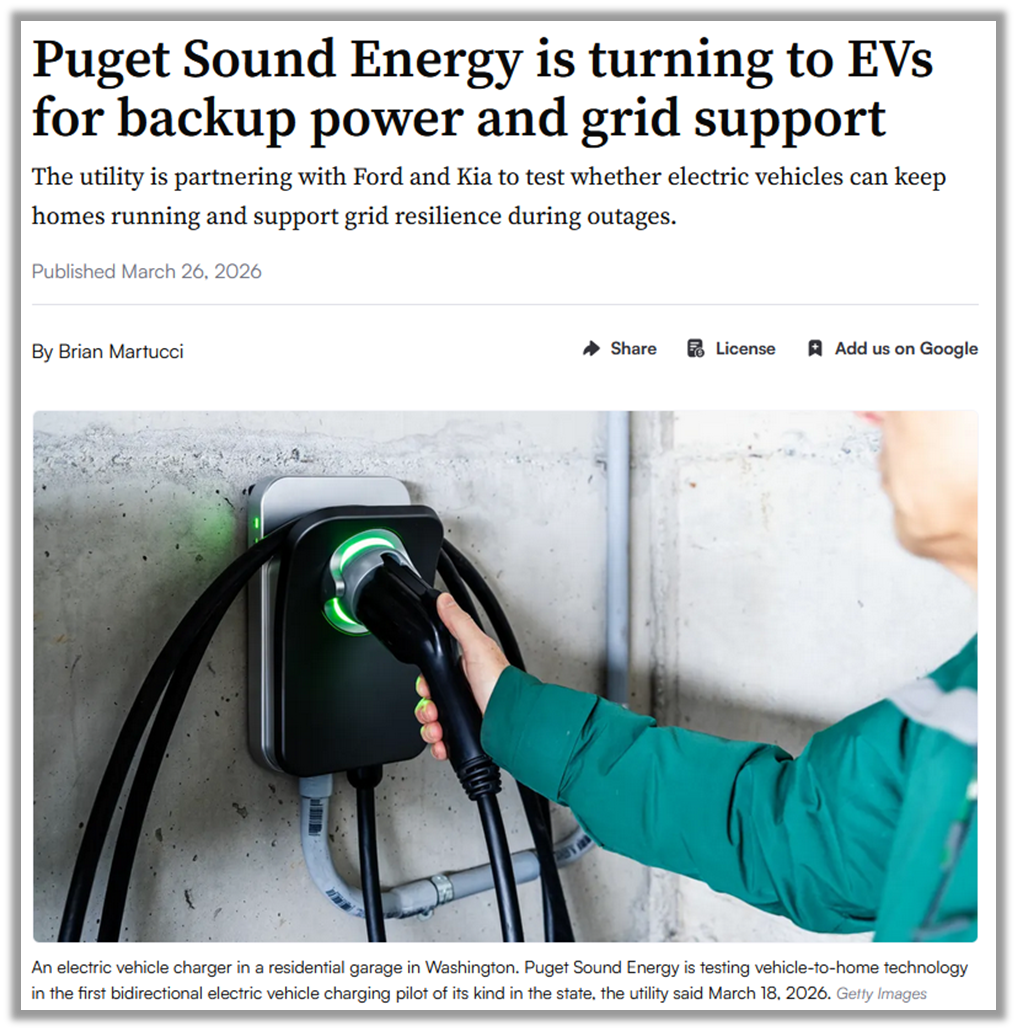
This article describes a test program where six EVs are connected to the grid, just by plugging them in at the existing charging socket and using the existing cord. This technology is well-proven and in use in other places. Virtual Power Plants already can call on vehicle batteries as well as home batteries.
The key is the power electronics. A vehicle needs to have power electronics that will respond to requests to allow power to flow out of the battery as well as into the battery.
Link: Vehicle to Home article
Quote:
“Though most of its sales already come from clean sources, Puget Sound Energy has identified demand response as a key lever for integrating more carbon-free power. In 2023, it announced a partnership with Autogrid — now part of Uplight — to deploy 100 MW of virtual power plant capacity within two years. More recently, it inked a deal with BrightNight and Cordelia Power to purchase power from a 200 MW/800 MWh battery facility that a utility spokesperson said would help alleviate grid congestion and integrate more clean energy when it comes online, likely next year.”
Tag: Professional Reading